Modernisation of IT Workstations in Pärnu Hospital Ambulances
An ambulance IT solution is much more than a computer mounted inside a vehicle. It is a complete mobile working environment consisting of a computer, docking station, power supply, communication connections, antennas, printer, GPS, cabling and integrations with other information systems.
In 2026, Supervivent modernised the IT workstations in seven ambulances operated by Pärnu Hospital. During the project, the previous-generation IT solutions were removed, the necessary infrastructure was rebuilt, and new rugged workstations designed to operate in the demanding conditions of emergency vehicles were installed.
The Need for an IT Upgrade Was Driven by a New Generation of Software
At the end of 2026, the mGIS application previously used in ambulances will be discontinued and replaced by NUGIS.
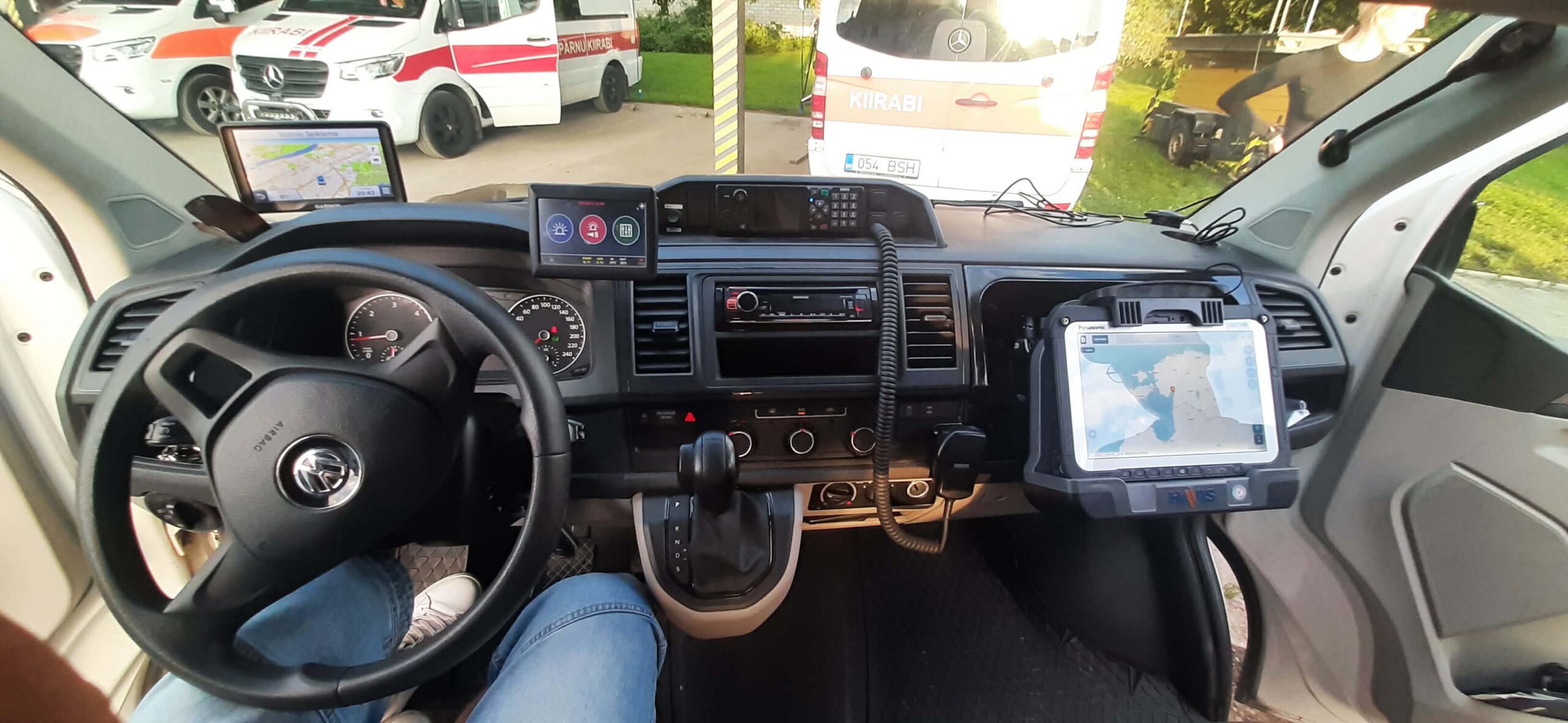
This meant that older Windows 7 and Windows 8 devices were no longer suitable for the new solution. Pärnu Hospital’s ambulance fleet used a previous-generation ML solution, where the computer was installed separately under the seat and a dashboard-mounted monitor served as the user interface.
Therefore, simply replacing the old computer with a new one was not enough. The project involved upgrading the entire technological generation of the ambulance’s mobile IT workstation.
Seven Ambulances, but Not Seven Identical Installations
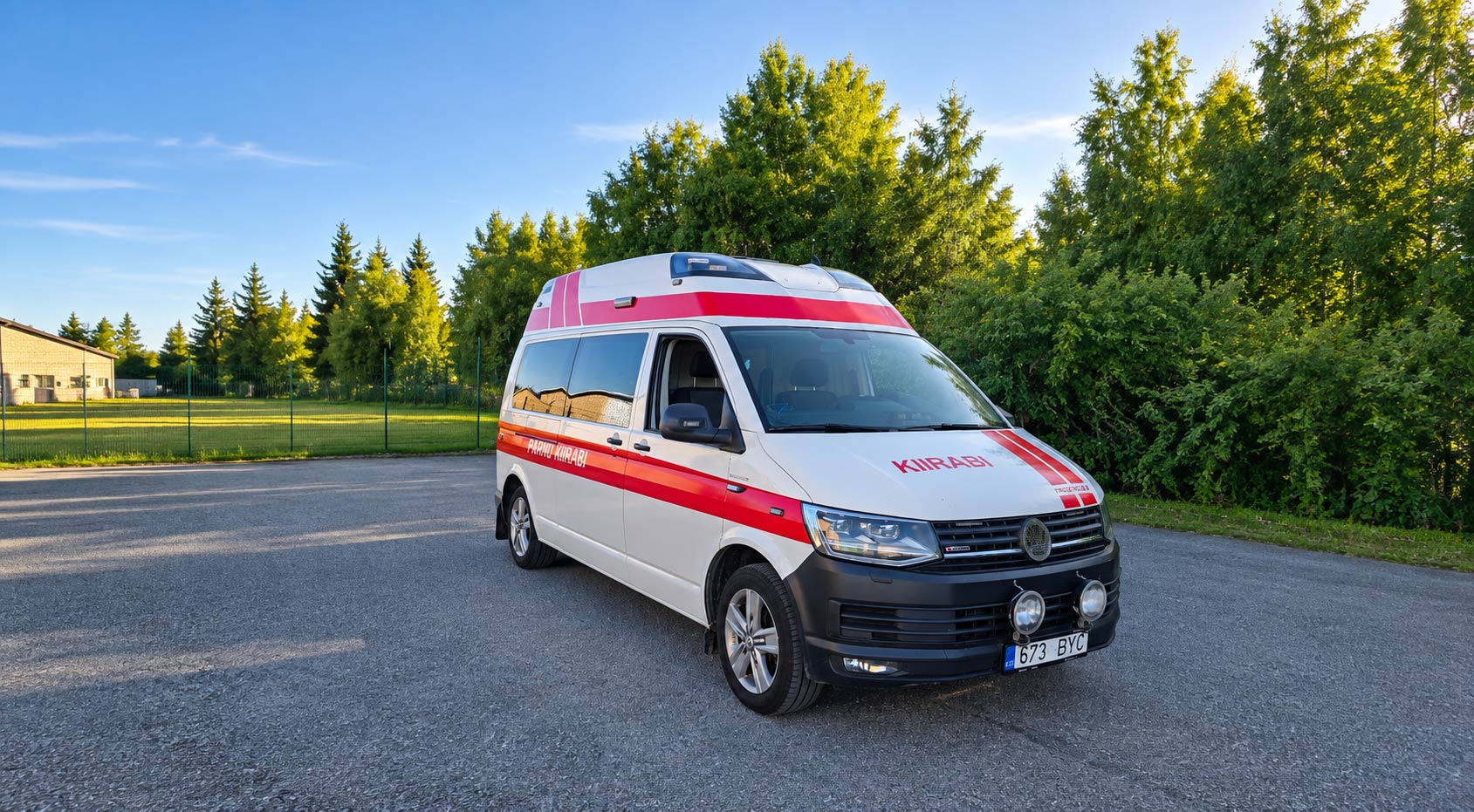
The project covered seven ambulances of different ages – Mercedes-Benz Sprinters and Volkswagen Transporters. The vehicles had been built at different times and by different vehicle conversion companies, which meant that their existing IT installations also varied.
Depending on the ambulance, the previous solution included:
- ML Novator vehicle computer;
- standalone monitor;
- Brother mobile printer;
- Garmin FMI connection;
- standalone GPS;
- Teltonika RUT950 or an earlier-generation router;
- ID card reader;
- power, USB, network and antenna cabling.
For this reason, each vehicle had to be inspected individually before the upgrade, and the installation had to be planned according to the technical configuration of that particular ambulance.
Panasonic TOUGHBOOK G2 at the Heart of the New Ambulance IT Workstation
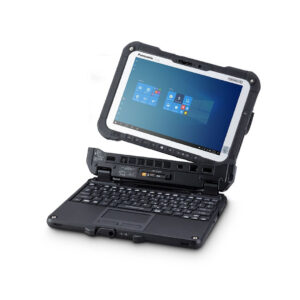
The central device of the new solution is the Panasonic TOUGHBOOK G2 fully rugged tablet, designed for environments where a conventional laptop or tablet is simply not sufficient.
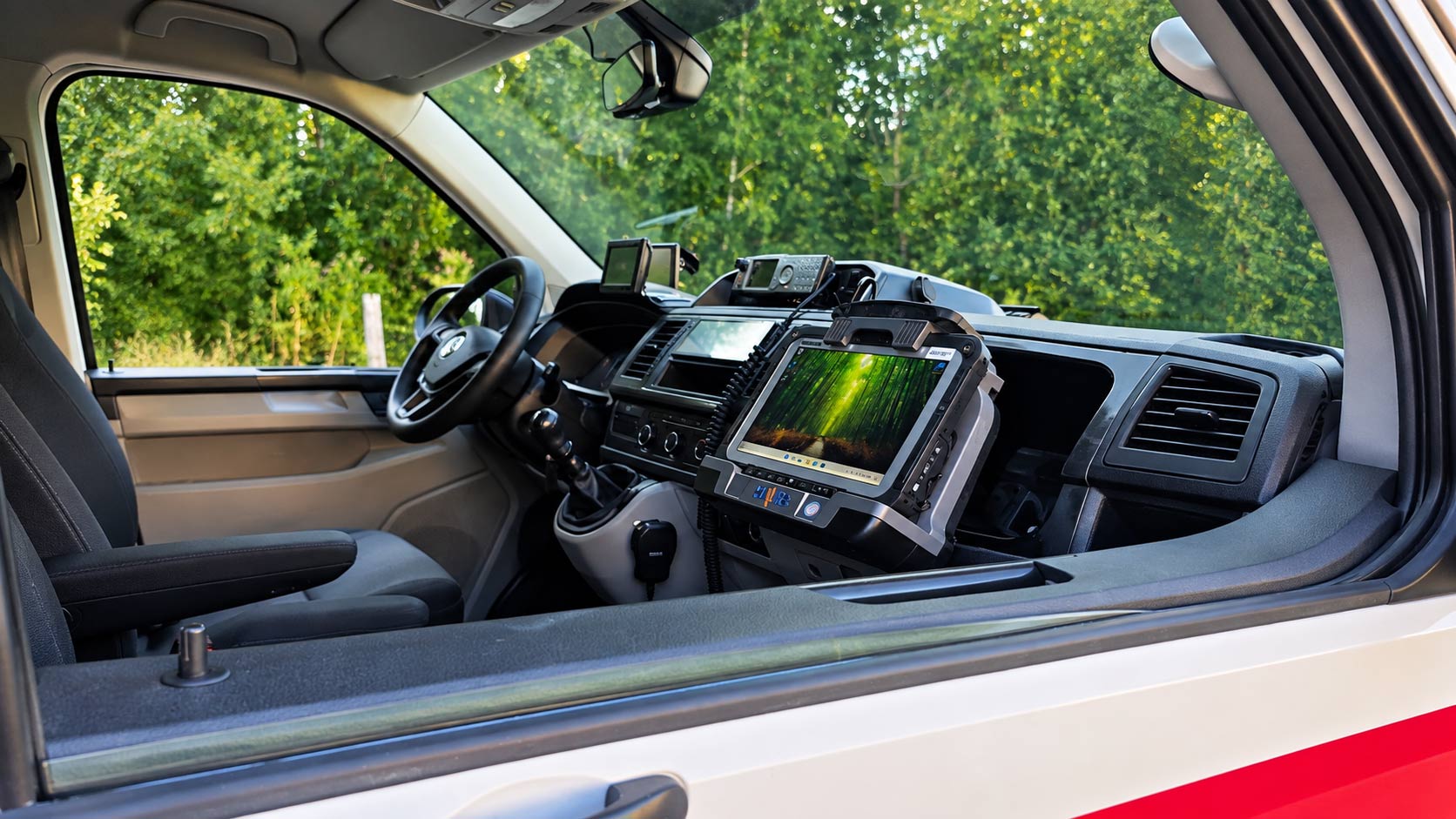
The TOUGHBOOK G2 was installed in the vehicle using a Havis DS-PAN docking station. The dock does more than provide secure mechanical mounting – it also serves as a port replicator, enabling connections for Ethernet, USB devices, RS232 and external antennas.
The TOUGHBOOK G2 was selected for several features that are particularly important in ambulance operations:
- IP65 protection rating;
- MIL-STD-810H durability standard;
- operating temperature down to –29 °C;
- resistance to vibration and drops;
- 1000-nit display;
- touchscreen operation even when wearing gloves.
The Brother PJ-883 A4 mobile thermal printer was selected as the printing solution. It operates from the vehicle’s electrical system and supports both Windows devices and Apple AirPrint.
The result is a mobile workstation whose components have been selected specifically for the real-world operating conditions of an emergency vehicle.
Communication Infrastructure Built with the Future in Mind
In the new architecture, the primary network connection is handled through the rugged tablet. At the same time, it was decided to retain the existing Teltonika RUT950 routers in the ambulances, where possible, as a backup solution.
To support this, 4G antennas were added to the vehicles, new antenna cables were installed, and a physical LAN connection was created between the router and the new computer dock.
A wired connection was a deliberate choice. In a moving vehicle, Wi-Fi may not always provide the reliability and stability required for a critical connection.
The cabling was installed during the modernisation project because adding it later would have required reopening the cable duct in the floor as well as several interior panels.
As a result, the ambulance IT infrastructure was prepared not only for today’s requirements but also for potential future needs.
First a Pilot Installation, Then the Rest of the Fleet
The first two ambulances effectively served as pilot installations.
In the actual vehicle environment, the mechanical stability of the dock, power supply, cabling and network connectivity were tested. Details identified during the initial inspection were corrected, and the connectivity of the solution was verified in cooperation with TEHIK.
Only after the pilot solution had been validated did the modernisation of the remaining vehicles continue.
This approach made it possible to test and implement the necessary adjustments before scaling the same solution across the entire fleet.
Installing New Equipment Is Only Half the Job
Modernising the ambulance IT environment involved more than simply installing new equipment. The old IT infrastructure also had to be properly removed from the vehicles.
The old computers, monitors, printers, GPS devices, ID card readers and obsolete cabling were dismantled.
The handling of data storage devices was documented individually for each device, and decommissioned storage media were securely erased or destroyed under controlled conditions.
This is an important part of the complete IT equipment lifecycle. Responsibility for data and equipment does not end when an old computer is removed from the vehicle.
Minimising Disruption to Daily Ambulance Operations
Upgrading emergency vehicles involves an important constraint that does not exist in a typical office IT project: the ambulance must be returned to operational service as quickly as possible.
Vehicle movements, technical installations and TEHIK configurations were therefore coordinated to minimise disruption to the provision of emergency medical services in Pärnu County.
By 24 July, the final ambulance had been upgraded, and on 27 July the complete seven-vehicle solution was officially handed over.
Following the final inspection of the vehicles, Pärnu Hospital confirmed that the solutions met the agreed requirements and the project was successfully completed.
7 Vehicles. 21 New Core Devices. One Complete System.
As a result of the project, seven Pärnu Hospital ambulances were equipped with:
- 7 × Panasonic TOUGHBOOK G2 rugged tablets
- 7 × Havis vehicle docking stations
- 7 × Brother PJ-883 mobile printers
However, the true value of the project is not measured by the number of devices.
What matters is the complete solution – the computer, dock, power supply, communications, antennas, printer, cabling, information system compatibility, maintainability and the reliability of the entire system in a real ambulance environment.
Because a rugged device alone does not make a rugged solution.